
An article online recently caught my eye. Titled “Communing Without Nature”, this article outlines the declining participation in visits to National Parks and the effect this could eventually have on conservation efforts.
The report states that “ Camping, fishing and per capita visits to parks are all declining in a shift away from nature-based 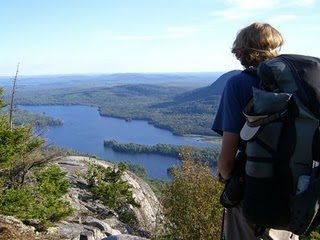 recreation”. It goes on to say “By studying visits to national and state parks and the issuance of hunting and fishing licenses the researchers documented declines of between 18 percent and 25 percent in various types of outdoor recreation”. A couple of the specifics the article mentions include “fishing peaked in 1981 and had declined 25 percent by 2005, the researchers found. Visits to national parks peaked in 1987 and dropped 23 percent by 2006, while hiking on the Appalachian Trial peaked in 2000 and was down 18 percent by 2005”.
The culprit? You guessed it: Television and video games. The article states “the decline, found in both the United States and Japan, appears to have begun in the 1980s and 1990s, the period of rapid growth of video games”. This quote really made me sad: “The replacement of vigorous outdoor activities by sedentary, indoor videophilia has far-reaching consequences for physical and mental health, especially in children”. The report also states, “Videophilia has been shown to be a cause of obesity, lack of socialization, attention disorders and poor academic performance”.
The long range implications of this problem are many. I have to ask myself where will our society be in 20 years? Our entertainment crazy culture is becoming like an addict looking for the next fix in another “reality” TV show or the latest video game. We are living vicariously through other peoples contrived adventures, or having “adventures” through digital characters.
The implications for our public lands are scary. The article states, “declining nature participation has crucial implications for current conservation efforts,” wrote co-authors Oliver R. W. Pergams and Patricia A. Zaradic. “We think it probable that any major decline in the value placed on natural areas and experiences will greatly reduce the value people place on biodiversity conservation.”
Without participation, where will support for conservation of lands come from? If our population of the future cannot truly relate to standing on a peak alone in a vast wilderness, where will the push to save these lands for future generations come from? Without true experiences in the outdoors, who will be here to stand up for our public lands in the future?
I would like to propose that we all become part of the solution to this problem. We as outdoor enthusiasts, should put aside some of the time that we take for ourselves in pursuing our activities – and bring someone with you. Find a kid you can take on your next paddle trip. Find a friend that’s never been on a true wilderness trip, and bring them on your next hike. Volunteer to be a scout leader – then focus on getting the kids into the wilderness. Find a scout troop that you could act as a “wilderness assistant” to take the group to areas you have paddled or hiked. The possibilities are endless. In short, pay your dues to the future of our wildlands by investing some of your outdoor time into others. Not only will this enrich their lives, but yours as well.
___________________________
Response on 2/28
I got an email from our friend Babs Evers with Leave No Trace (LNT) yesterday. Read on to see how our little blog is getting around the web:
- Children in the U.S. spend, on average, 6 hours in front of a screen PER DAY (computer, iPod, TV, etc.) That’s over 40 hours per week – it’s like a full time job for many kids.
- 97% of kids in the U.S. Spend less than 30 minutes per day outside doing unstructured activities, i.e. not engaging in sports, school activities, etc. The amount of time kids spend playing in creeks, digging in the sand, running through the woods and just being kids outside is no doubt on the decline.
By now, I’m sure you’ve all read or at least heard of Last Child in the Woods by Richard Louv. If not, check it out. It’s very, very interesting.
If we’re not raising a generation who sees and appreciates the value in our natural areas who will step up when it comes time to save them from the myriad issues facing these beloved places?